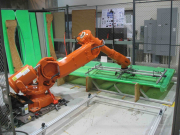
This project will develop an operator-guided semi-automatic assembly process using industrial robots integrated with multiple sensors. The goal of the project will be to improve manufacturing productivity by enhancing the operator’s capabilities though advanced robotics, and appropriately applying the technologies that capitalize on the strengths of the robotics (e.g. precise manipulation) and the operator (e.g. decision-making).
Completed Projects
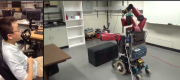
This project will develop effective robotic assistance for individuals with C4-C7 SCI for activities of daily living (ADL) such as house work or food preparation. The inability to perform ADL are major reasons that individuals with SCI and other disabilities move from living independently to intermediate care residences, because dedicated human help is expensive.
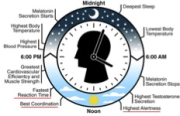
The goal of the project is to determine personalized optimal strategies for circadian rhythm regulation and scheduling of tasks and sleep to optimize mental performance of mission performers. Towards this goal, this project will focus on four directions of research: 1. Analyzing mathematical models that include both circadian and sleep processes. 2. Developing optimal algorithms for entrainment. 3. Developing optimal strategies for maximizing mental alertness during critical missions. 4. Developing state estimation algorithms that will allow for the implementation of the optimal strategies in the closed-loop.
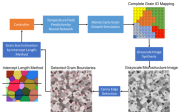
This research will develop the understanding and methods necessary to generate and interpret experimental and simulated descriptions of microstructural transformation during thermo-mechanical processing, and then to apply the necessary control of processing conditions to generate a prescribed microstructure in the alloy Ti-6%Al-4%.
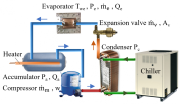
There is a significant need for efficient thermal management for cooling photonic devices such as LED, laser diodes, GaN devices such as High Electron Mobility Transistors, and high performance integrated circuits. High temperatures can degrade performance and efficiency, possibly leading to irreversible damages. This research considers two-phase cooling using microchannel evaporators in a vapor compression cycle. The goal is to design and fabricate microchannel evaporators and develop modeling, optimization, and control strategies for efficient and robust operations.
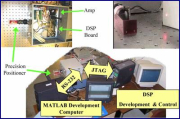
Precision motion is an indispensable part of microelectronic systems and their manufacturing, for example, read/write head motion in disk drives, chip placement motion in surface mount machines, laser drill motion in electronic packaging, scanning motion in confocal microscope, etc. Precision motion is also critical for micro-assembly and Micro-Electro-Mechanical-Systems (MEMS) actuation in applications to RF, micro-optic and micro-fluidic devices. With the continuing demand on high performance and low cost, the requirement on the motion subsystem, in terms of speed and precision, is also ever more stringent. Due to the high volume of data or parts these systems have to process, even a few percentage of throughput increase can have major economic impacts in terms of the overall system performance improvement and production cost saving.